What Good Commissioning Really Looks Like
There is still a basic misunderstanding in the AEC industry about commissioning.
Many people assume commissioning means checklists, meetings, site walks and a final report. If those things happen, the job must have been commissioned. In reality, those items are tools, not outcomes.
Good commissioning is not a paperwork exercise. It is not attendance and it is not simply a box to check to satisfy a requirement. At McCownGordon, commissioning is approached as a way to directly improve the building an owner receives. It reduces hidden risk, identifies problems early and strengthens understanding of how systems should function together. Most importantly, it helps teams resolve issues before they become long-term operational burdens.
Weak commissioning focuses on activity. Strong commissioning focuses on outcomes. That distinction matters more than most people realize.
Where Most Building Problems Begin
Many building issues are not caused by one major failure. They develop over time from smaller problems that were never fully addressed.
This might include a sequence that looks fine on paper but does not hold up in operation, a control strategy that was never fully thought through, or equipment access that makes routine maintenance more difficult than it should be. It can also include systems that technically run but do not respond well as conditions change, or front-end graphics that provide data without clarity.
That is where good commissioning earns its value, and why it should start early rather than after a project is already dealing with symptoms.
Commissioning Starts in Design
If commissioning begins once equipment is installed and startup is underway, much of the leverage has already been lost. At that point, the process becomes reactive, with teams verifying performance inside decisions that were made months or years earlier. While some issues can still be identified, many of the most impactful problems were created upstream through unclear intent, weak coordination, incomplete sequences or lack of operational thinking during design.
Good commissioning starts during design because that is where many future problems can still be avoided.
At this stage, the work is not simply reviewing documents for completeness. It is pressure testing the logic behind the design. Does the system align with how the owner will actually use the building? Do the sequences make sense in real-world conditions? Have reset logic, alarms, safeties, overrides, failure modes and system integration been fully considered? Has maintainability been addressed, not just installation?
A weak design review looks for missing information. A strong design review looks for operational consequences.
Carrying That Intent Into Construction
That same distinction carries through construction.
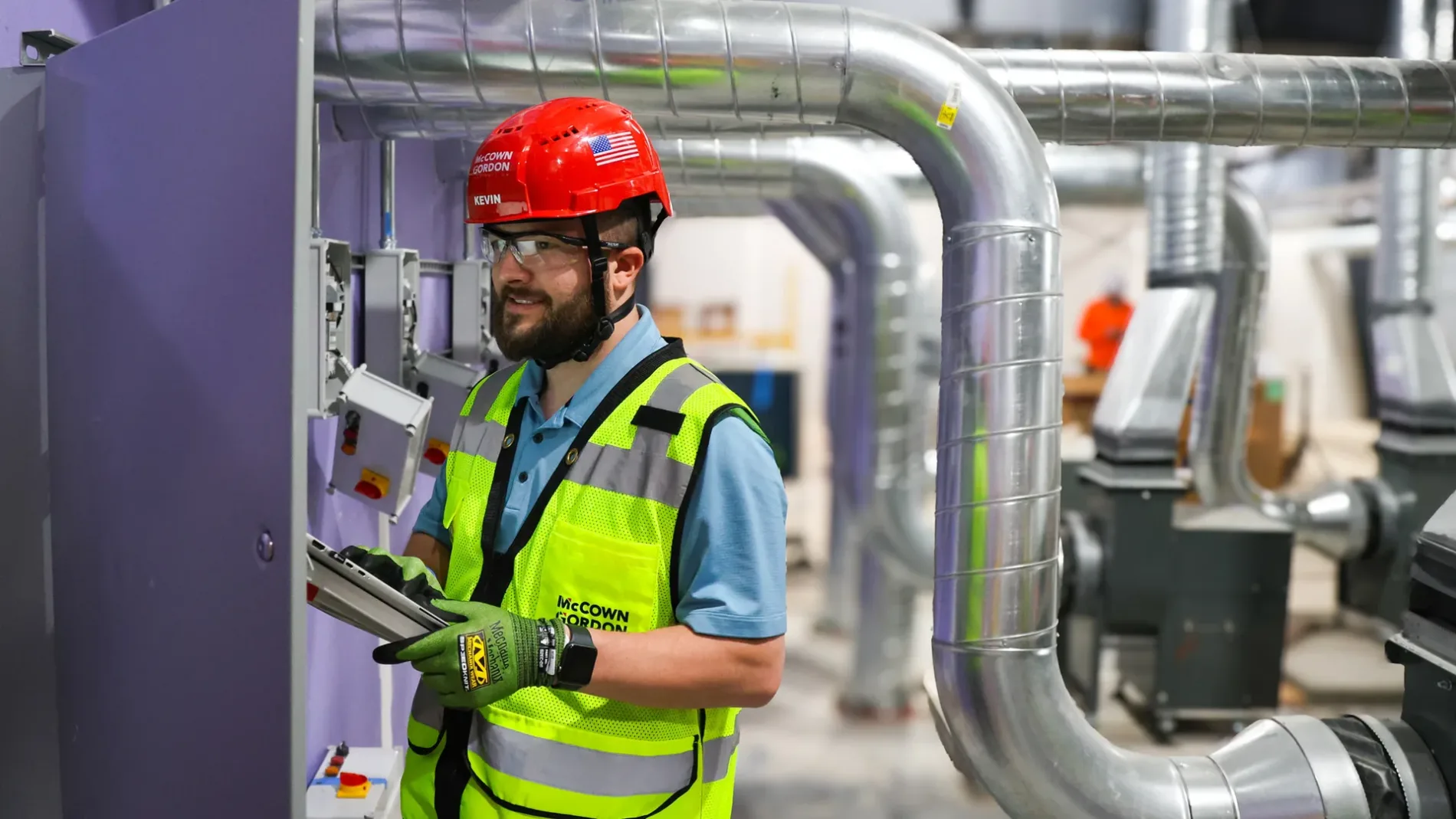
Good commissioning during construction is not passive observation. It is technically grounded involvement that helps teams identify issues while there is still time to do so. This includes meaningful submittal review, careful attention to controls and sequences and active coordination across systems.
This is where technical depth matters. Buildings do not struggle because a form was missing. They struggle because systems were not fully understood, because controls intent was weak, because equipment and sequence did not align or because issues were allowed to move downstream without resolution. An integrated commissioning team helps stop those issues before they become owner problems.
Testing as Proof, Not a Formality
Startup, testing and turnover are often where teams reveal what they truly believe commissioning is meant to accomplish.
Weak commissioning treats testing as an event. Strong commissioning treats testing as proof. The goal is not to confirm that a unit starts and stops, but to verify that systems respond properly under the conditions that actually matter. That requires understanding how systems transition, how they interact, how they recover and how they behave as real operating conditions change.
Controls knowledge is critical. A building can appear to perform well during a short test and still struggle over time. Trend data often tells a more accurate story, revealing instability, overrides, poor reset behavior, simultaneous heating and cooling, drifting set points and operational patterns that would never be obvious from a checklist alone.
Good commissioning looks beyond isolated equipment and evaluates system behavior as a whole.
Delivering Value at Turnover
Owners do not inherit equipment in isolation. They inherit how the building actually performs, including alarm noise, graphics, maintainability challenges, comfort calls, unexplained energy use and the ongoing effort required to operate the facility.
That is why turnover matters just as much as testing.
When commissioning is done well, owners receive more than documentation. They receive a building that is easier to understand, operate and maintain. Facilities teams gain clearer insight into system intent, known risks and how to respond when performance drifts.
Raising the Bar for Commissioning at McCownGordon
Good commissioning protects owners from inheriting operational debt. It reduces the gap between design intent and lived reality, giving project teams a better path to resolution rather than another layer of reporting. It improves readiness, not just recordkeeping.
At McCownGordon, our in-house commissioning experts are focused on outcomes, not just attendance. Presence is not performance. Documentation alone is not resolution. Value is created through deep technical understanding, early involvement and accountability for how systems actually perform.
Commissioning should be judged by results: clearer system intent, stronger coordination, better systems behavior and fewer long-term operational burdens for owners.